

Key Points
- Economic security risks are no longer exceptional events. They are now part of a “new normal.” In many cases, these risks reflect externalities that neither governments nor firms can address independently.
- Governments and firms are not in a hierarchical relationship; rather, they are complementary actors possessing different forms of knowledge and facing different constraints.
- Public–private partnership should not be understood merely as “cooperation,” but as participation in the joint construction of an economic security architecture suited to this new normal.
Why Is Public–Private Partnership in Economic Security Now Under Scrutiny?
Since the beginning of 2026, a series of consequential developments has reshaped the international environment, including U.S. law enforcement action involving Venezuela’s president and China’s imposition of dual-use export controls targeting Japan. In the technological domain, China—where the import of advanced semiconductor manufacturing equipment has become increasingly restricted—has begun to achieve domestic production of such equipment, further accelerating fragmentation and competition. Geopolitical tensions, economic restrictions, and technological decoupling are not sudden or episodic risks. Rather, they have increasingly become part of the normal operating environment.
The Japanese government has responded by establishing the Economic Security Office within the Minister’s Secretariat of the Ministry of Economy, Trade and Industry (METI) in 2019, and an Economic Security Division within the National Security Secretariat (NSS) in 2020. It subsequently enacted and developed institutional frameworks, including the Act on the Promotion of Economic Security (2022), the Act on the Protection and Utilization of Critical Economic Security Information (2024), and legislation related to Active Cyber Defense measures (2025). METI and the NSS initially served as the primary institutional architects during the framework’s formative phase. More recently, following the establishment of the Cabinet Cybersecurity Director-General (2024), discussions regarding the creation of a National Intelligence Agency and the enactment of anti-espionage legislation suggest that economic security is entering a new phase centered on national defense and information protection.
In the private sector, Mitsubishi Electric (October 2020), Denso (December 2020), and NEC (April 2021) established specialized economic security divisions ahead of many other firms. Recognizing that U.S.–China technological rivalry had become explicit and that economic security posed a strategic risk to the long-term viability of corporate operations, these firms began to act proactively.
The objectives pursued by the government under the banner of economic security do not necessarily coincide with those of corporations. Yet because the front line of economic activity lies with firms, there are limits to what individual corporate efforts can achieve when confronting risks that stem from “negative externalities” beyond their control. Under these conditions, how can governments and firms collaborate effectively? The answer to this question lies at the core of what public–private partnership truly entails.
What Does the Government Know—and What Does It Not Know?
The government aggregates information on diplomacy and regulation through its international networks and, by necessity, is well-versed in inter-state dynamics and institutional developments. In particular, with regard to diplomacy, military affairs, the economy, and public security, the Director of Cabinet Intelligence (within the Cabinet Intelligence and Research Office) reports on “what is happening,” while the National Security Secretariat reports on “what should be done,” both on a regular basis to the Prime Minister.
However, the government does not possess detailed knowledge of the realities of corporate activities. When China strengthens export controls on specific minerals, the government is not an all-knowing body capable of instantly grasping the precise impact. In practice, it must gather information painstakingly through consultations with companies likely to be affected. Nor does the government have sufficient knowledge regarding technological superiority or first-mover advantage.
Viewed from this perspective, public–private partnership cannot be understood through the simplistic assumption of government superiority and private–sector inferiority. Such a hierarchical conception does not hold in the sphere of economic governance.
What Do Firms Understand—and What Do They Fail to Perceive?
Firms have a firm grasp of the realities of their businesses, technologies, and transactions, and they calmly analyze the position of their operations and technologies vis-à-vis competitors in other companies and countries. This is information essential for bearing responsibility in daily decision-making.
Yet as the externalities associated with conflicts, sanctions, and institutional inconsistencies intensify, a single firm’s information-gathering and analytical capabilities alone are increasingly insufficient to translate these risks into concrete managerial decisions.
When trade regulations are tightened, most firms analyze the impact on their own operations and take countermeasures. However, within increasingly complex global supply chains, identifying one’s own choke points is far from straightforward.
Moreover, conventional risk matrices grounded in economic rationality—defined as probability of occurrence multiplied by financial impact—are inadequate for capturing economic security risks. The current international environment lies beyond what traditional corporate governance frameworks had anticipated. Within governance structures built on the assumptions of standard business management textbooks, mechanisms capable of detecting economic security risks were not sufficiently embedded.
The “Instruments” of Public–Private Partnership as Conceived by the Government
When economic security is discussed within firms, it is often perceived as an antithesis to economic rationality. Similarly, when the government advances economic security initiatives toward corporations, firms tend to interpret them primarily as “constraints.”
Against this backdrop, the government’s conception of public–private partnership includes the following five approaches, some of which remain at the planning stage:
- Institutionalizing information-sharing: The government is preparing a “Public–Private Council” to enable confidential information-sharing and dialogue between public and private actors.
- Raising governance-related issues: The government has published the “Economic Security Management Guidelines”, clarifying the measures that corporate executives should recognize and implement, and calling for enhanced dialogue with stakeholders.
- Accepting private-sector personnel into government: As “external experts,” METI has begun accepting personnel from private firms, with the aim of enhancing information-gathering capabilities on both sides and sharing modes of thinking premised on crisis scenarios.
- Establishing a government think tank: Under the Research Institute of Economy, Trade and Industry (RIETI), the government is establishing a think tank function dedicated to foundational research and analysis on economic security. Public–private partnership is regarded as an essential condition for this effort.
- Collaboration with private think tanks: Through collaboration with private think tanks, the government envisions positioning Japan as a global platform for economic security policy leadership. In 2025, a concentration of international conferences related to economic security was held in Tokyo.
To be sure, these institutional “instruments” remain incomplete as mechanisms for fully establishing a complementary relationship between government and business. What merits attention, however, is that the government has moved away from the notion of “a strong state and a subordinate private sector” and has shifted toward sharing information with private actors. Public–private partnership is not merely a cooperative arrangement; it represents participation in constructing an economic security architecture capable of responding to this new “normal.” The durability of such collaboration depends not only on incentives but on whether both sides recognize themselves as co-architects of economic governance.
Is Japan’s Public–Private Partnership Advancing?
Observers overseas often describe Japan’s public–private partnership as “advanced” or even “remarkable.” Certainly, the interests of the government—as a regulatory authority—and those of firms—which seek to preserve the greatest possible freedom of transaction—are inherently in tension.
Although generalization is hazardous, Europe—where norm-setting often precedes implementation—tends to possess strong momentum toward regulatory institutionalization, particularly in areas such as competition policy. Yet the high degree of transparency required in public–private dialogue can make it difficult to grasp firm-level realities and may delay implementation. Moreover, even those normative foundations have been shaken by the political fragmentation in several European countries and by shifts in the United States’ posture toward Europe.
The United States, by contrast, excels in the sheer volume of information held by the government and in the speed with which sanctions and regulatory measures can be deployed. However, the relationship between government and business there often gravitates toward a binary of “enforcement” or “subsidy,” and places relatively greater emphasis on enforcement and incentive mechanisms than on explicitly framing public and private actors as co-designers of national economic governance.
In Japan’s case, the government has historically sought cooperation from the private sector on the premise that it does not “know everything.” One possible explanation for this historical orientation lies in the postwar period of economic dislocation, when resources necessary for economic activity were severely depleted and a shared understanding of the necessity of public–private cooperation emerged. This does not mean that the government became wiser, nor that the private sector became compliant.
Institutionally, Japan’s framework remains incomplete. Yet amid the rapid destabilization of the international environment, the Japanese model can be regarded as one viable model for how public–private partnership might function effectively.
Why Do Only a Minority of Firms Remain Engaged?
Even so, only a limited number of firms have incorporated economic security into their governance frameworks or have recognized the importance of public–private partnership.
If economic security is misunderstood merely as a set of risk-avoidance measures and results in excessive restraint, it could undermine not only firm–level competitiveness but also the broader economic strength that underpins national power. In that sense, it must be said that only a small minority of firms truly understand the essence of economic security.
One reason for this lies in the fact that economic security has largely been discussed within the context of national security. As a result, within corporations it tends to be treated as an extension of regulatory compliance. Moreover, from the perspective of corporate governance, it is often framed as an issue of risk avoidance or accountability. The aforementioned Economic Security Management Guidelines, for example, explain corporate engagement in economic security partly within the context of the duty of due care. There is therefore concern that outside directors who do not fully understand the concept may, out of a desire to avoid personal liability, induce excessive risk avoidance—resulting in a contraction of business initiative.
Correcting the tendency to treat economic security purely as a matter of “defense” requires communication through public–private partnership grounded in a renewed understanding that the government and firms operate from fundamentally different vantage points.
Implications for Business
For firms, economic security is not simply regulatory compliance; it is part of a management strategy aimed at sustaining long-term business growth. From this perspective, public–private partnership is not a question of whether to participate, but of how to engage in the construction of an economic security architecture. The government, for its part, must explain public–private partnership not solely in the language of national security, but in terms of corporate incentives.
At the same time, firms must consider how to incorporate externalities—market distortions—into their decision-making processes; who should take responsibility for public–private and inter-firm collaboration; and what forms of intelligence should be embedded within the organization to elevate economic security to the level of management strategy. The necessary conditions are in place to cultivate and bring to maturity a Japanese model of public–private partnership worthy of global recognition.
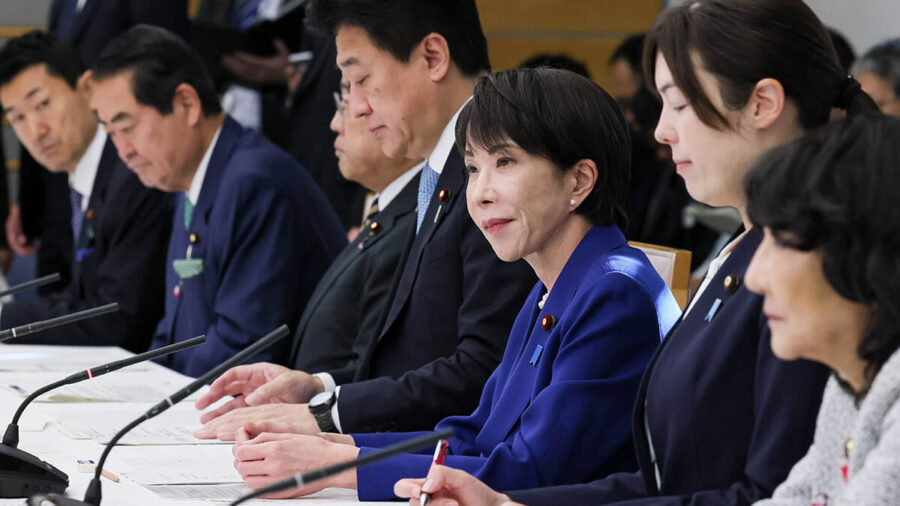
(c) Prime Minister’s Office of Japan, Council for the Promotion of Economic Security
