
Key Points
- Corporate governance reforms since 2013 have reshaped corporate behavior through the increased presence independent outside directors and strengthened market discipline, achieving certain results such as improved capital efficiency and stock price appreciation. At the same time, concerns have emerged regarding a growing short-term orientation, distortions in the allocation of managerial resources, and the expansion of formalistic compliance.
- The global environment has shifted dramatically—from an era of globalization premised on free trade to one defined by great-power competition and economic security. Strategic government intervention in economic activity and the expanding role of corporations in national security are increasingly evident. Corporate governance debates traditionally anchored in market autonomy are now being compelled to reexamine their underlying premises.
- Economic security is increasingly linked not only to compliance and risk management but also to growth strategies. Long-term government engagement, such as Takaichi administration’s “crisis-management and growth investment” initiative,” has the potential to create new market opportunities. Integrating economic rationality with national security considerations will be the key going forward.
More than a decade has passed since the introduction of Japan’s Corporate Governance Code (hereafter, the “CG Code”). This article reviews the current state of corporate governance reform in Japan and, while examining the changing premises underlying governance debates, presents a perspective grounded in economic security.
The Current State of Corporate Governance Reform in Japan
Corporate governance concerns the principles through which listed companies work with shareholders and other stakeholders to enhance medium– to long–term corporate value. In Japan, debate gained momentum following the financial “Big Bang” reforms of the late 1990s, but governance reform became firmly institutionalized only after the Abe administration’s Japan Revitalization Strategy – Japan is Back (2013).
During the Cold War, Japan was valued by the United States as a bulwark against communism and developed a distinctive growth model optimized for employment stability under the convoy system and the main bank system. After the Cold War, however, as the liberalization of movements of people, goods, capital, and information accelerated, geopolitical considerations from the United States weakened. The Japanese management model—highly successful under the exceptional conditions of the Cold War yet increasingly path-dependent—gradually lost its competitive advantage.
Building on international developments—such as corporate governance reforms in the United Kingdom and the OECD Principles of Corporate Governance—the Abe administration sought to improve the low capital efficiency of Japanese firms from a shareholder-value perspective that had long been neglected in Japan. By attracting global investment, it aimed to generate a virtuous cycle of productivity improvement and investment (the “investment chain”). The concept of “growth-oriented governance,” which emphasized supporting corporate growth rather than focusing solely on preventing misconduct, was distinctive to Japan, where management’s insufficient risk-taking had often been criticized.
As a result, both corporate management practices among listed firms and the structure of Japan’s capital markets have changed significantly. The number of independent outside directors—tasked with overseeing path dependency and promoting capital efficiency from a shareholder perspective—has increased substantially. These directors are now involved in decision-making on critical matters such as growth strategies, mergers and acquisitions, and the appointment of CEOs and senior executives. Boards of directors have also shifted from venues primarily focused on approving operational matters and confirming legal compliance to forums for strategic direction-setting. Capital market reforms have likewise progressed, and Japan is now one of the most active markets for shareholder activism outside the United States. In 2024, the Tokyo Stock Exchange announced “Measures to Realize Management Conscious of the Cost of Capital and Stock Price”, further intensifying domestic and international pressure on Japanese firms to enhance capital efficiency.
The Nikkei Stock Average reached its highest level since 1990 within roughly a decade from 2013, and has remained on an upward trajectory following the inauguration of the Takaichi administration. While geopolitical structural factors also played a role, there is a widely shared view—both domestically and internationally—that stock price appreciation over the past decade and more has been underpinned by expectations generated through corporate governance reform.
At the same time, amid rising market pressure, criticism has emerged that firms have prioritized short-term results through cost-cutting and shareholder returns, while allocating insufficient managerial resources to long-term growth investment. High cash holdings may be regarded as inefficient from the standpoint of capital efficiency, yet there remains discomfort with the prospect that such funds may flow not to domestic stakeholders but to overseas speculative investors. Furthermore, although the CG Code espouses a principles-based approach, successive revisions have added increasingly detailed provisions, expanding norms and rules not directly linked to firms’ earning power and encouraging a checklist-style formalism.
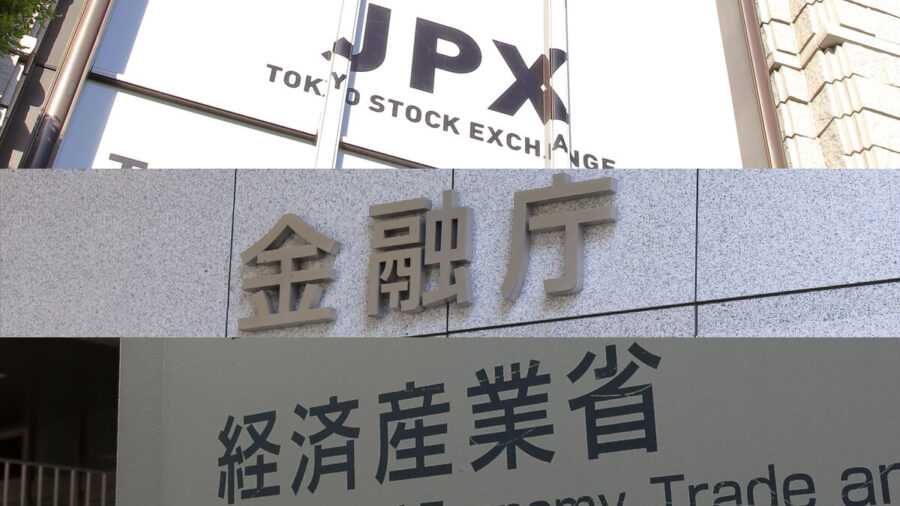
Currently, the Financial Services Agency and the Tokyo Stock Exchange are convening an Expert Panel on the Revision of the Corporate Governance Code, advancing discussions on its review. Topics under consideration include streamlining and re-principlizing the Code by returning to its original foundations, as well as clarifying methods for assessing the appropriateness of managerial resource allocation.
Corporate Governance in the Era of Great-Power Competition
The most significant difference between the time of the CG Code’s introduction in 2015 and today lies in the transformation of geopolitical conditions and the changing perception of the role of corporations in national security.
At that time, the prevailing assumption was the continued advancement of globalization. The dominant outlook held that rules-based international order and economic prosperity would be realized through free trade, the free movement of capital, and multilateral cooperation. Economic rationality grounded in market principles, the minimization of the state’s role, and the pursuit of universal values beyond national borders constituted the mainstream worldview. At the time, “economic security” was not widely discussed as a general policy issue in the way it is today.
To be sure, the “return of geopolitics” had already begun with Russia’s annexation of Crimea in 2014. However, such awareness remained largely confined to parts of the security community and did not become broadly shared across the business world. Thereafter, under the first Trump administration inaugurated in 2017, U.S.–China tensions became increasingly explicit. In Japan, caught between the two powers, debates intensified over issues such as technology leakage. Following the global spread of COVID-19 in 2020 and Russia’s invasion of Ukraine in 2022, supply chain disruptions and geopolitical risks came to be recognized as concrete management challenges for corporations.
Looking ahead, as reflected in the U.S. National Security Strategy published in November 2025, the international order may increasingly be shaped by great powers pursuing competition and coexistence based not on values or ideology, but on practical interests. Investment in advanced and emerging technologies, as well as the strengthening of production and infrastructure capabilities, constitutes not only a growth strategy through market competition but also a foundation for national defense and security. Corporations are being called upon to assume strategic roles at the intersection of the economy and national security, and economic security is increasingly positioned as a framework that links the state and the corporation, as well as security imperatives and economic rationality. In practice, government policy judgments are shifting from an emphasis on solving global challenges or realizing universal ideals toward securing national and public interests. This trend should be understood not as a phenomenon unique to the Trump administration, but as part of a broader structural transformation of the international system.
Such changes compel a reconsideration of the very premises underlying debates on corporate governance. A symbolic issue is the positioning of the state and government within corporate governance frameworks.
Like the OECD Principles of Corporate Governance, which served as one reference in its formulation, the CG Code identifies shareholders, employees, business partners, and local communities as corporate stakeholders. However, it does not explicitly position the state or government within this framework. Yet given the reality that governments are strengthening their involvement in economic activity through strategic industrial policy and economic security measures, it is difficult to conclude that the existing Code adequately reflects the global trends described above.
Corporate governance theory, developed under the assumptions of globalization, is thus being called upon to undergo a certain degree of reconstruction in light of changing times.
Issues of Corporate Governance as “Economic Security”
Japan has accumulated advanced discussions from its own distinctive perspective in both corporate governance and economic security. The challenge going forward is how to effectively connect the two. Rather than proposing specific policy prescriptions, this section presents analytical perspectives for organizing their relationship.
The relationship between corporate governance and economic security can be conceptualized across three layers: (1) compliance; (2) risk management; and (3) growth strategy.
A typical example of compliance concerns trade and export controls. The Toshiba–COCOM incident illustrates how failures in board oversight and internal controls can threaten a company’s very survival. At this layer, the cost burden associated with regulatory compliance is emphasized, and economic security is recognized as a form of “defensive governance.” So long as companies can correctly interpret the policy intentions of various countries amid rapidly changing international politics and appropriately grasp changes in rules, this remains a domain in which response measures are relatively clear.
However, with the expansion of dual-use technologies and the normalization of hybrid warfare, economic security can no longer be treated merely as a matter of rule compliance. It now requires evaluating, from both operational and managerial perspectives, which businesses, technologies, and transactions carry what kinds of risks and opportunities within specific geopolitical contexts. Boards of directors bear the obligation to establish internal control systems and must appropriately review and, where necessary, strengthen risk management frameworks in response to changes in the external environment. Accordingly, economic security as risk management must naturally be positioned as a core concern of corporate governance.
Recently, in annual board effectiveness evaluations required under the CG Code, some companies have introduced evaluation items such as “strengthening information gathering and analytical capabilities with geopolitical impacts in mind” and “enhancing risk management systems in light of economic security trends.” In some cases, appropriate issue-raising by outside directors has meaningfully influenced the executive side and strengthened economic security initiatives. In other instances, however, insufficient understanding among outside directors has led to formalistic confirmation questions or excessive demands, increasing administrative burdens without substantive benefit. How boards monitor economic security from a risk management perspective will become an increasingly important governance issue.
In this respect, the Ministry of Economy, Trade and Industry’s publication in January of this year of the Economic Security Management Guidelines 1.0 provides many useful reference points for companies seeking to systematize their initiatives. It is significant that the document is framed as a “management guideline” rather than merely as a “response.” Although not legally binding, the guidelines state that initiatives aligned with them can support managerial judgment and may serve as evidence that directors have fulfilled their duty of care. Because a checklist is included in the appendix, one option would be to incorporate it into enterprise risk management (ERM) frameworks and report the results of annual reviews to the board, thereby establishing a mechanism to appropriately monitor emerging risks. For regulators as well, constructing a framework to assess how the guidelines are being utilized and what practical challenges arise—and to feed those findings back to companies—will be important from the standpoint of promoting public–private collaboration.
The first two layers require a certain degree of public–private cooperation, particularly in terms of information sharing amid rapidly changing security conditions. Fundamentally, however, they remain within the scope of companies’ voluntary initiatives. Recently, economic security has moved one step further and is increasingly positioned as a national growth strategy, thereby deepening its relationship with corporate governance. At this layer, the state itself becomes an important stakeholder, and the central issue becomes how to design strategic public–private collaboration. Discussions premised solely on the mindset of the globalization era are no longer sufficient.
The Takaichi administration has established the “Japan Growth Strategy Headquarters” and is promoting “strategic investments undertaken proactively by the public and private sectors to address various risks and social challenges, including economic security, food security, energy security, health and medical security, and national resilience.” Specifically, 17 strategic sectors have been designated as targets of “crisis-management and growth investments,” with the government seeking to enhance corporate predictability through active fiscal policy and long-term commitments. This was not envisioned at the outset of corporate governance reform. In the era of great-power competition that has followed globalization, the evolving role of government and corporations in national security has expanded the growth domains into which companies can newly deploy managerial resources. The framework of “investment and financing toward the United States” can be understood in a similar light.
Whereas the Abe administration positioned corporate governance reform as a core component of its growth strategy, the Takaichi administration positions economic security itself as a growth strategy, thereby influencing corporate governance. The former centered on shareholder value and capital markets; the latter is anchored in the state and national security. Economic rationality is often seen as compatible with the former and at odds with the latter. Yet attention must now turn to how new market domains emerging from geopolitical change can promote corporate growth.
Certainly, geopolitical shifts toward an era of great-power competition generally exert upward pressure on firms’ cost of capital (WACC). However, if appropriate and sustained government commitment is recognized as creating opportunities for investments that would be difficult for the private sector alone to undertake, it may help absorb downside business risks. Government involvement—if developed in a manner suited to the era of economic security—can create an environment in which companies earn returns exceeding their WACC.
It is worth noting that economic security was not introduced as a narrative device to allow companies to evade capital market discipline. A mere sense of obligation framed as “national necessity” will not secure favorable market evaluation; initiatives must ultimately be explained in terms of profitability and future cash flows. What is important, therefore, may be for the public and private sectors jointly to visualize and redesign the concept of a “geopolitical premium” appropriate to the era of economic security. Absent such shared understanding, security risks may be mispriced—either overestimated or underestimated. Corporate governance reform originally sought to embed the concept of WACC within Japanese firms. Extending that effort, the public and private sectors must work to establish a level playing field for growth investment in order to integrate economic rationality and the legitimacy of security. This point should become the core of public–private collaboration.
Fundamentally, what is the mission of the corporation? Is it to increase profits and share prices, to create social value on a human scale, or to contribute to national prosperity? To answer “all of the above” may sound naïve, yet to cling to only one would be intellectually arrogant. The answer to the question “for whom (or what) does the corporation exist?” inevitably shifts with the times. The relationship among these three objectives is unlikely to remain immutable.
In the new geopolitical environment likely to persist for some time, Japan is well positioned to present a new model that bridges corporate governance and economic security.
Note: The author provides consulting services related to enhancing board effectiveness and strengthening management systems at listed Japanese companies. The views expressed in this article are the author’s personal opinions and do not represent the official views of affiliated organizations.
Tokyo Stock Exchange, Inc.:(c) Rainbow /amanaimagesFinancial Services Agency:(c) Alamy /amanaimagesMinistry of Economy, Trade and Industry:(c) Alamy /amanaimages
