
Key Points
- Following the release of the Japan-U.S. investment Memorandum of Understanding (MOU), political backlash within South Korea against concluding a similar agreement with the United States delayed Korea-U.S. investment negotiations even after a provisional deal had been reached, pushing the final signature to the leaders’ summit at APEC.
- The final agreement lowers U.S. auto tariffs on Korean vehicles from 25 percent to 15 percent and secures an annual investment cap of USD 20 billion. However, when viewed relative to GDP, the total investment commitment of USD 350 billion places a heavier burden on Korea than on Japan.
- Because the MOU is legally non-binding and because the United States will continue to pursue its “sovereign wealth fund” agenda through project-by-project negotiations, Korea will continue to face a landscape in which risks and opportunities are intertwined.
Criticism of the Japan-U.S. Investment Agreement and Domestic Politics in Korea That Delayed Negotiations
In July of this year, Korea and the United States reached a broad preliminary agreement in tariff negotiations and announced a USD 350 billion investment package for the United States. However, the subsequent detailed negotiations took far longer than expected. Underlying this delay were strong in Korea of the Memorandum of Understanding (MOU) on Japan’s Investment in the United States agreed between Tokyo and Washington, and the resulting political dilemma this created for the Korean administration.
In particular, lawmakers from South Korea’s ruling Democratic Party sharply criticized the Japan-U.S. agreement as a “humiliating unequal treaty.” Responding to this, the Lee Jae-myung administration publicly declared that it would “treat the Japan-U.S. agreement as a cautionary example” and “not replicate Japan’s approach.” As a result, it became politically difficult for the government to accept terms similar to those agreed to by Japan.
When the preliminary agreement was announced in July, the Korean negotiating team praised it as “the best possible deal, more favorable than Japan’s,” creating the impression that a final signature was imminent. However, even during President Lee’s visit to the United States in late August, no signing took place, and the government shifted to a more cautious stance toward a formal agreement. In an interview with TIME magazine in early September—coinciding with his 100th day in office—President Lee stated: “If I had agreed exactly as the U.S. demanded, I would have been impeached.” Such remarks reflect how rapidly public opinion had turned negative.
As a result, the Korean government delayed the negotiations, seeking additional concessions from the United States. Caught in this self-imposed bind, the Korea-U.S. investment negotiations were ultimately pushed back to the bilateral summit at APEC in October.
Outcomes: Avoiding the 25% Tariff Shock and Securing a USD 20 Billion Annual Cap on Investments
At APEC, Korea and the United States reached a breakthrough and signed the Korea-U.S. Strategic Investment Memorandum of Understanding (MOU). The major outcomes are as follows.
The most significant achievement is the reduction of U.S. auto tariffs on Korean vehicles from the current 25 percent to 15 percent. This avoids what Korean policymakers had described as a “25 percent tariff bomb,” which would have significantly undermined the export competitiveness of Korea’s auto industry. Japan had already secured the reduction to 15 percent in July, with the new tariff applied from September; Korea has now caught up.
Second, the final agreement establishes a ceiling on annual investment disbursements. Initially, the United States sought a massive front-loaded investment commitment schedule over roughly three years, ending January 2029. This sparked strong concerns in Korea, particularly regarding foreign-exchange risks associated with such front-loaded disbursements. In response, the final agreement stipulates that, of the USD 350 billion investment commitment, USD 200 billion of cash investment will be executed in annual installments not exceeding USD 20 billion. Rather than injecting astronomical sums all at once, investment will be phased in according to the progress of each project, providing Korea with a meaningful safeguard against financial and currency-related risks.
The annual cap also means that investment will continue well beyond President Trump’s term. This is important for risk diversification and for adjusting to policy changes in the event of a future administration.
Third, there is the issue of who ultimately owns the returns in the shipbuilding sector. Of the USD 350 billion total, the remaining USD 150 billion will be allocated to shipbuilding. This includes not only direct investment in the United States by Korean firms, but also loan guarantees and ship finance provided by Korean financial institutions. It has been agreed that all profits generated from these projects will accrue to Korean firms.
Fourth, the structure for setting up special purpose vehicles (SPVs) differs from that in the Japan-US framework.Unlike the Japan-U.S. model, which creates a separate SPV for each project, the Korea-U.S. arrangement adopts a fund-type structure in which one umbrella SPV is established first, under which smaller project-specific SPVs will operate. This makes it possible to offset losses from one project with gains from others.
The Korean government has reaffirmed that it will invest only in “commercially viable” projects, emphasizing that investment will be limited to projects that can reasonably be expected to recoup costs.
A Heavy Burden: USD 350 Billion in Total Commitments
On the other hand, the USD 350 billion investment commitment remains a heavy burden for Korea’s economy. The scale of the commitment corresponds to roughly 20 percent of Korea’s nominal GDP. By comparison, Japan’s USD 550 billion commitment constitutes only about 13 percent of its GDP—meaning that Korea is assuming a much larger burden relative to its economic size.
In addition, the annual maximum of USD 20 billion in cash investment is almost half the size of Korea’s annual defense budget. With limited fiscal space and increasing domestic investment needs for economic security, maintaining such an intensive level of overseas investment over the long term will be challenging, both politically and economically.
Some have criticized the deal as “a bad bargain.” For example, Korea’s estimated annual export losses from the 25 percent tariff were only about USD 12.5 billion. Agreeing to a USD 350 billion investment package—20 to 30 times larger—has been called disproportionate. The U.S. think tank CEPR argues that Korea accepted an investment MOU amounting to roughly 20 percent of its GDP in order to avoid export losses equivalent to just 0.7 percent of GDP, a structure it criticizes as unreasonable.
An “Incomplete Agreement” and Continuing Negotiations for Each Project
The signing of the MOU does not mean that Korea-U.S. negotiations are “completed.” The USD 200 billion noted in the document represents only an “upper bound on potential investment”; how much will actually be invested in which projects will only be decided through future project-by-project negotiations.
Under the MOU, the Investment Committee chaired by the U.S. Secretary of Commerce will identify promising projects and, in collaboration with the Consultation Committee chaired by the Korean Minister of Trade, Industry, and Resources, make recommendations to the U.S. president. The president will then select projects and request Korean participation. This process will continue until January 19, 2029. In practice, this means Korea faces a prolonged round of case-by-case negotiations, examining the feasibility and profitability of each project and adjusting conditions—or even rejecting proposals when necessary.
Political uncertainty further complicates matters. President Trump has repeatedly demonstrated unpredictable decision-making and has a record of unilaterally withdrawing from or renegotiating deals in the past. Policy reversals by the Trump administration, or a change of administration after the 2028 election, could jeopardize the current agreement.
Moreover, the MOU is a weak administrative agreement with limited legal enforceability, functioning effectively as a gentlemen’s agreement dependent on both sides’ good-faith execution. The document explicitly states that if investment commitments are not fulfilled, the United States may reimpose tariffs—giving the United States substantial leverage.
Given these realities, some argue that Korea, like Japan, should have acted more quickly. If the United States’ investment demands were unavoidable and if significant uncertainty would remain even after signing an MOU, Korea should have “first secured the tariff reduction from 25 percent to 15 percent, then negotiated the investment implementation afterward.”
In retrospect, considering that time was not on Korea’s side in negotiations with the United States, the initial strategic choices remain a source of frustration.
The United States’ Underlying Intent
At the core of the negotiations is the United States’ intention to leverage allied capital to build a de facto U.S.-style sovereign wealth fund (SWF) aimed at supporting strategic industries and critical infrastructure. President Trump, through Executive Order 14196, directed the exploration of a U.S. SWF in February 2025, and Commerce Secretary Lutnick has discussed the National Economic Security Fund (NESF) initiative along the same lines.
Given the United States’ enormous fiscal deficits, it cannot build a sufficient fund using domestic tax revenues alone. Therefore, Washington is seeking to use investment commitments from allies such as Japan, Korea, and Taiwan as foundational capital for the fund.
The U.S. government’s acquisition of Intel shares, proposals to invest in defense and shipbuilding companies, and even ideas resembling “toll taxes” on Nvidia and AMD for sales to China can all be understood in the context of the NESF vision: building a portfolio centered on strategic industries.
In light of this and given the strong U.S. desire for discretionary control over the fund, Korea will face significant challenges in ensuring that its preferences in future negotiations over specific investment projects.
Investment Opportunities as a “Dual Character”
However, focusing exclusively on the costs of the Korea-U.S. agreement obscures an important dimension of the framework. The U.S. market offers exceptional growth and profitability, particularly in strategic sectors such as semiconductors, AI, space, and defense. These sectors benefit from robust government support and large domestic demand, resulting in high profit margins.
For example, while Korean firms in these sectors average net profit margins of around 6 percent, leading U.S. firms exceed 15 percent. From this perspective, the investment package can be seen not as a simple outflow of capital but as an “entry fee” to achieve deeper integration into high-return sectors—an investment aimed at securing future growth engines.
Indeed, Japan, by committing USD 550 billion, appears intent on securing a “special stake” in the development of America’s core industries.
Less widely known is that during APEC, Taiwan also held discussions with Secretary of State Rubio and Treasury Secretary Bessent on a plan to establish a U.S.-based science and industrial park modeled on Taiwan’s high-tech cluster—a plan to build a “Taiwan-model” science park in the United States. Taiwan aims to bring together its major semiconductor and AI server companies as a “national supply chain all-star team,” relocating them collectively into U.S. industrial zones. In return, Taiwan seeks U.S. support in areas such as land, energy, talent, taxation, and visas.
Korea, too, must shift from passively accommodating U.S. demands to proactively using the investment framework as a mechanism for market entry and a means to seize high-returns in the United States.
Conclusion: Economic Security Strategy at a New Starting Line
The period between the provisional agreement in July and the final agreement in October highlights the complexity of economic security diplomacy and the lessons it offers. Although domestic criticism and pragmatic interests at times pulled negotiations in conflicting directions, Korea must now reassess its execution strategy to balance national interest maximization with risk management.
Formally, the Korea-U.S. investment negotiations have reached a milestone, but in practice, “the real game begins now.” As the subtitle of this report suggests—“the agreement is not the end but only the beginning”—the outcome for Korea will depend on how effectively it manages the upcoming project-level negotiations and institutional arrangements.
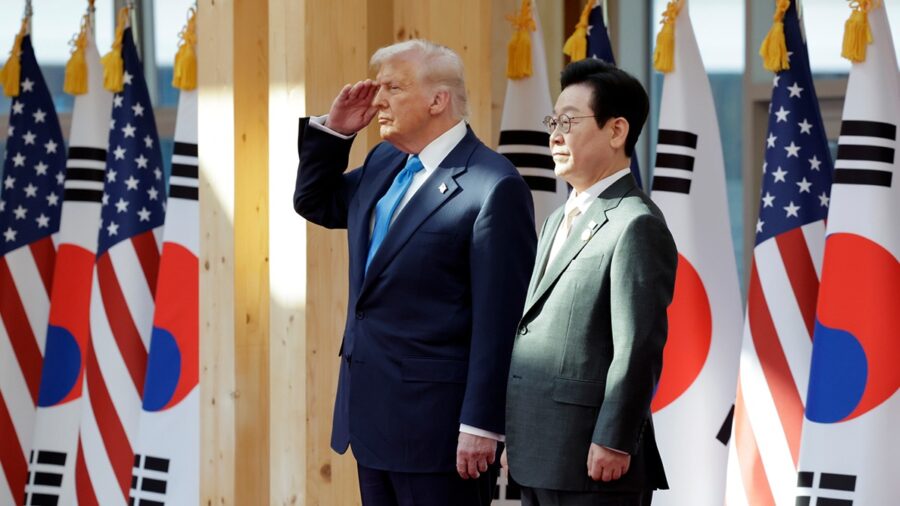
(c)Apec2025korea via ZUMAPRESS/amanaimages
