
With this installment we begin a four-part series by Naoki Tamaki, a specialist in Middle Eastern affairs and energy who is based in Saudi Arabia. It is an attempt to reconsider the present crisis–too readily bundled together in press coverage as “turmoil in the Middle East”–through the eyes of an expert living in the region. This first installment examines, from a geopolitical perspective, what the Hormuz crisis means for Saudi Arabia.
Key Points
- The Hormuz crisis strikes directly at the world’s energy supply chains. Its effects reach national economies not through crude oil alone but through condensate, refined products, naphtha, freight rates and insurance premiums.
- The crisis does not act on every country in the same way. Which sea a state faces, where its ports and pipelines lie, and the security relationships it has built over time–in an emergency, these begin to matter.
- Saudi Arabia is among the countries that reveal these differences most clearly. Its access to two seas–the Persian Gulf and the Red Sea–has brought the Kingdom’s geographic depth into sharper focus during the current crisis.
The Geography revealed by the crisis
Missile and drone strikes, and the closure of the Strait of Hormuz: in Japanese and Western reporting these are often treated as “turmoil in the Middle East”. In practice, however, the impact of the present crisis is far from negligible. According to the U.S. Energy Information Administration (EIA), the volume of crude oil, condensate (the ultra-light oil derived from natural gas) and refined products passing through the Strait of Hormuz fell from 20.7 million b/d in the fourth quarter of 2025 to 14.6 million b/d in the first quarter of 2026–a fall of 6.1 million b/d, or 29.5 percent quarter on quarter. When one of the world’s principal chokepoints is closed, the knock-on effects for national economies are unavoidable. The prices of crude and naphtha have risen sharply, and the adverse consequences for the Japanese economy are beginning to show.
Seen from within the region, however, the present crisis amounts to more than mere disorder. Which country faces which sea, where it holds its ports, where it has routed its pipelines and what security relationships it has cultivated: conditions that lie dormant in peacetime acquire decisive significance in a crisis. In the present case, Saudi Arabia is among the states that illustrate this most clearly.
Within Riyadh there is little of the tension outsiders might imagine. When warning sirens sound, people become alert; but the city continues to function normally, and the day unfolds at its usual pace. This is not because no crisis exists, but because the crisis is understood differently. The Kingdom views the present situation less as a threat to the foundations of the state than as an opportunity to reassess its strategic position.
The conflict involving Iran is disrupting global energy supply chains. Yet it also brings Saudi Arabia the benefit of higher oil revenues. The Kingdom faces real burdens, including slower growth and rising defense and logistics costs. At the same time, higher crude prices and government contingency planning are lifting its revenues, while the Red Sea coast is gaining importance as a route that bypasses the Strait of Hormuz. The crisis does not merely place pressure on Saudi Arabia; it once again renders the country’s geographic advantages visible.
A country that cannot be understood through oil alone
To view Saudi Arabia only as an “oil producer” is to miss the larger picture. Occupying most of the Arabian Peninsula, the country faces two seas: the Persian Gulf and the Red Sea. It not only holds oil but enjoys the geographic advantage of being able to choose which sea to ship it through.
Since its founding in 1932, Saudi Arabia has been home to Mecca and Medina, Islam’s two holiest sites, and as one of the world’s largest producers it has exercised influence over Middle Eastern politics and energy markets alike. On the broad definition that includes liquids beyond crude, oil production in 2024 reached around 11 million b/d. Saudi Aramco, the state oil company, has said it will maintain its Maximum Sustainable Capacity at 12 million b/d.
The Kingdom’s power, however, does not rest on capacity figures alone. Within the OPEC+ framework it moves its output up and down, calibrating the volume it brings to market as required. Just as important, its export routes are not confined to the Gulf. To hold volume is one thing; to be able to choose when, from where and how to release it is another. In an age of crisis, it is the latter that confers power.
From the mid-2010s the Kingdom faced a shifting environment: weak crude prices, an American disengagement from the Middle East and the growth of Iran’s regional influence. The shale revolution had reduced US dependence on Middle Eastern energy, and Washington’s willingness to underwrite Gulf security had become less assured than before. Reading this change early, Saudi Arabia set out Saudi Vision 2030–a program intended, by 2030, to wean the economy off oil, improve the investment climate and build new industrial foundations, including in tourism and logistics–and embarked on social reform and a more assertive industrial policy.
There is a parallel here with Japan in the Meiji Restoration period. The historical circumstances are, of course, entirely different. Yet the two are alike in turning from the passive endurance of external pressure to the remaking of institutions, industry and society. A crisis does not only weaken a state; at times it can serve as the spur to transformation. Saudi Arabia’s efforts to pursue a foreign policy less dependent on the United States can also be understood as part of this broader transformation: OPEC+ alongside Russia; economic ties with China; the rupture with Qatar and its later reversal; the China-brokered restoration of Saudi–Iranian relations in 2023; and the careful maneuvering over normalization with Israel. In each case the aim is to keep options open rather than to commit to a single camp.
The same shift is visible in the vast new-city and special-economic-zone project (NEOM) under way on the Red Sea coast in the Kingdom’s north-west. Saudi Arabia maintains no relations with Israel and, outwardly, keeps its distance. Yet NEOM extends across territory lying roughly 160 km in a straight line from Eilat, at Israel’s southern tip. Once, such proximity would have been a constraint on development. This region–where the Nabataeans built a trading civilization in antiquity–was always a place suited to settlement, commerce and the creation of wealth. Locating a flagship national project there suggests that the Kingdom does not view Israel only through the lens of a traditional military threat.
Waning trust in the neighborhood and the fragility of the Gulf cities
In the current Hormuz crisis, several assumptions surrounding Saudi Arabia have begun to shift. Israel, for all its display of military strength, has seen its standing as a guarantor of regional stability diminish. The United States, too, is increasingly seen less as the guarantor that contains a crisis than as an actor capable of enlarging it. Iran, the foremost regional rival, has had its strength sapped by the series of strikes. China and Russia, meanwhile, have stopped short of open military support or decisive intervention. This caution underscores Iran’s isolation and, by comparison, widens Saudi Arabia’s room for diplomatic maneuver.
The same instability reaches the city-state models inside the Strait of Hormuz – Dubai and Abu Dhabi in the UAE, and Doha in Qatar. Over the past two decades these cities have drawn in finance, aviation, real estate, logistics, media and sport to raise their standing as international centers. Dubai in particular, despite its meager oil resources, built a model in which foreigners could readily work, spend and invest, by applying religious and social norms comparatively lightly.
That openness, however, rests on a complicated geography. Since signing the Abraham Accords in 2020, under which the UAE and Israel normalized relations through U.S. mediation, the UAE has narrowed the distance between itself and Israel. At the same time, Dubai’s commercial world has long been inseparable from the movement of people, goods and money to and from Iran. This duality–drawing closer to Israel while sitting directly across the water from Iran–was an asset in peacetime, but in a crisis, it can unsettle confidence in the emirate as a “hub”.
Most of the UAE, and Qatar as well, lie inside the Strait of Hormuz to begin with. Not only energy but components, food, chemicals and the movement of people all presuppose a stable chokepoint. Geography that underpinned prosperity in peacetime becomes, in an emergency, a constraint in its own right.
Saudi Arabia, by contrast, commands two seas. Oil produced in the Eastern Province can be carried by the East–West Pipeline to Yanbu on the Red Sea. The line has conventionally been credited with a capacity of around 5 million b/d, but in 2026 it was reported to have run at up to 7 million b/d. An eastern outlet through Hormuz from the Gulf; a north-western outlet from the Red Sea through the Suez Canal to the Mediterranean and Europe; and a south-western outlet down the Red Sea into the Indian Ocean–the Kingdom has at least three ways out.
The Red Sea as Saudi Arabia’s front door
Confine the discussion to Hormuz, and it reduces to a single “blockaded strait”. Take in the whole peninsula, and Saudi Arabia occupies a position from which it can combine several seas with overland routes. If the Persian Gulf is the sea of energy, the Red Sea is a corridor binding the Mediterranean, the Indian Ocean and Africa.
For Saudi Arabia the Red Sea is no back door. The Hijaz–home to Mecca, Medina and Jeddah–has long been a front door across which people, goods, faith and civilization have passed. Jeddah sat on the maritime routes linking, by way of the Red Sea, the Mediterranean, East Africa, India and South-East Asia, and it served as the sea gateway to Mecca. People and goods that came ashore crossed the mountains of the Hijaz to join the caravan routes towards Damascus.
This geography lies behind the birth of Islam as well. Mecca and Medina were not isolated in the desert; they stood where Red Sea trade, pilgrimage, caravan routes, tribal society and contact with the wider world overlapped. Where different peoples mingle, shared norms are needed to bind them. Religion did not emerge in a vacuum but arose, and spread, along a corridor through which people and goods moved.
It is for this reason that the attention now paid to the Red Sea coast as a route around Hormuz works in favor of the Kingdom’s strategy of recent years. Before 2015, Saudi Arabia was not, at least in the contemporary sense, an outward-looking trading nation; but since Vision 2030 it has sought to become more than an oil exporter–a logistics and trade hub connecting Asia, Africa and Europe. The crisis raises the cost of defense, insurance and freight, yet it also offers an occasion to make international markets understand why the country has been investing in ports, industrial cities and transport infrastructure on its Red Sea flank.
Who is the structural winner?
None of this is to suggest that Saudi Arabia is unscathed. Were the crisis to drag on, even the alternative capacity on the Red Sea would reach its limits. Bab-el-Mandeb and Suez are chokepoints in their own right; and while higher crude prices flatter the public finances in the short term, a chilling of the world economy would bring the pain of falling demand. Tourism, foreign investment and urban development would all suffer if the region as a whole came to be seen as dangerous.
The Hormuz crisis is a serious source of instability for the Middle East as a whole. Yet when viewed through the question of who is losing power in relative terms and who is gaining options, a different picture emerges. Saudi Arabia is not simply being drawn into the crisis. Through it, the Kingdom’s geographic advantages, strategic room for maneuver, and standing as custodian of Islam’s two holiest sites, Mecca and Medina, are being reappraised. The present crisis may therefore prove to be an occasion that strengthens Saudi Arabia’s position.
*The views expressed in this article are solely those of the author and do not represent the views of any organization, including the institution with which the author is affiliated.
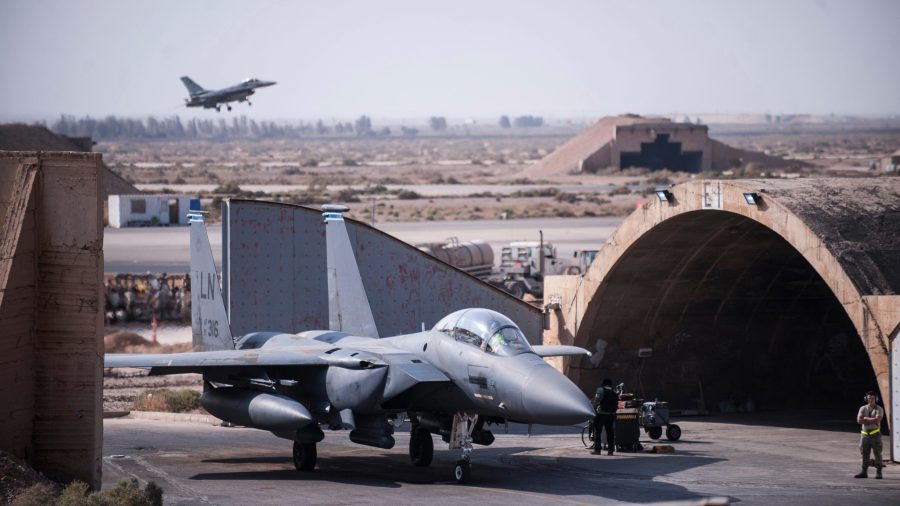
(c) Alamy Stock / Photoamanaimages