
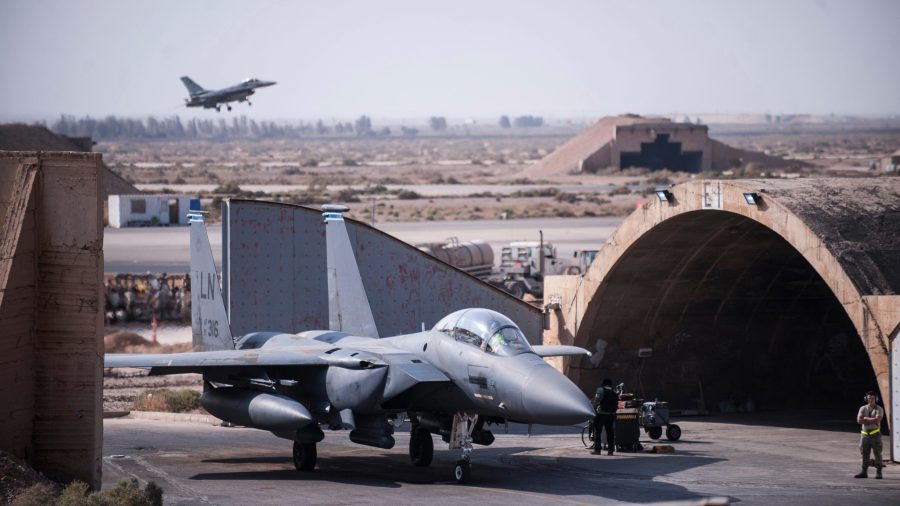
Does the presence of a U.S. military base make a host country safer, or does it expose it to greater risk? In this third installment, Naoki Tamaki, a specialist on Middle Eastern affairs based in Saudi Arabia, examines that question through the lens of the current crisis, drawing on his on-the-ground perspective.
Key Points
- The U.S. military bases in the Gulf states have long served as a deterrent underpinning regional order. The current crisis, however, has shown that bases intended to provide deterrence can also expose their host countries to retaliation.
- Host countries cannot necessarily influence or control U.S. military decision-making. Yet the consequences of a crisis extend to their territories, cities, airports, port facilities, and energy infrastructure. This asymmetry is the alliance dilemma.
- Discussions between the United States and Iran now cover nuclear inspections, sanctions relief, the resumption of shipping through the Strait of Hormuz, and efforts to prevent further escalation in Lebanon. This signals a possible easing of tensions, while also showing that the security of host countries depends not only on interceptor missiles but on the course of diplomacy.
A Global Display of the Risks
The current crisis has laid bare the multiple layers of the Middle Eastern order—from military affairs and energy to supply chains, confidence in Gulf cities, and the changing nature of U.S. engagement. This essay focuses on the reality that a country hosting U.S. military bases can, during a crisis, become a target of retaliation. The crisis has made that risk visible to the world.
When the United States takes military action against Iran, Tehran is more likely to seek nearby, vulnerable targets than to strike the U.S. homeland directly. This highlights two principal vulnerabilities: the Strait of Hormuz, a critical maritime chokepoint, and the U.S. military bases across the Gulf. Even if the bases themselves are not attacked, nearby airports, ports, energy facilities, and other critical infrastructure are placed at risk. In the age of drones and missiles, the area surrounding a base can also become a battlefield.
The pattern of searching for more vulnerable targets did not appear for the first time in this crisis. During the Iran–Iraq War of the 1980s, alongside the war of attrition between the two countries’ conventional forces, the conflict expanded into the “Tanker War,” in which tankers and port facilities in the Persian Gulf became targets of attack. Avoiding a head-on fleet engagement, Iran combined mines, small boats, anti-ship missiles, vessel inspections, and disruption of maritime navigation to disrupt its adversary’s supply lines, raise insurance premiums, and exert psychological pressure. The technologies have changed—today the tools include missiles, drones, cyber operations, and GPS jamming—but in turning the strait into a battlefield and raising the adversary’s decision-making costs, they follow the same strategic logic.
Equally important is how this overlaps with the United States’ broader strategic direction. In recent years, the United States has increasingly questioned the cost of maintaining its military presence abroad. It has called on allies to shoulder a greater and more proportionate share of the burden and has even made the terms of its overseas deployments a matter for negotiation. As a result, host countries have been compelled to reconsider “the cost of continuing to rely on the U.S. military.” Host countries are being driven less by U.S. pressure than by the realities they now face. Even without the United States itself choosing to withdraw, host countries have begun to reassess their dependence on U.S. forces.
From “Defending” to “Selling”: The Transformation of U.S. Engagement
This arrangement also works to Washington’s advantage. The United States can reduce its troop presence while leaving much of the risk with the host country, continue selling weapons and providing training, and retain control over intelligence networks and technical standards. As the U.S. physical presence shrinks, demand for U.S. weapons and defense support grows. Dependence on the United States is thus reproduced in a different form. The shift is from “defending” to “selling”: U.S. engagement in the Middle East does not end; it changes form.
The signs had already appeared. In September 2019, critical oil facilities in Saudi Arabia’s Eastern Province were attacked, and roughly half of Saudi crude production was halted for a time. The United States reinforced Saudi air defenses, but in 2021 it withdrew Patriot missile-defense systems and associated units from across the Middle East, including Saudi Arabia. Washington reinforced its presence in response to a crisis, then drew it down when its strategic priorities shifted. This pattern shows that the drawdown of U.S. engagement was implemented not merely through policy statements, but through concrete movements of equipment and personnel.
Seen in figures, the change is clear. In 2007, during the Iraq War, coalition forces reached roughly 170,000, and in Afghanistan U.S. forces peaked at roughly 100,000 around 2011. By contrast, even under the tensions following the Israel–Hamas war of October 2023, U.S. forces across the Middle East stood at more than 40,000, and during the escalation of tensions involving Iran in June 2025 they remained at a comparable level. From large-scale occupation to limited forward deployment and deterrence at a distance, the U.S. posture has changed.
At the same time, demand for equipment does not disappear. Saudi Arabia and the UAE have repeatedly faced missile and drone attacks by the Houthis. As missile-defense demand among the Gulf states has risen, the United States approved the potential sale of Patriot-related equipment to Saudi Arabia in 2022, worth approximately three billion dollars. The current crisis once again highlighted the rapid expenditure of interceptor missiles and the resulting strain on stockpiles. Patriot interceptor missiles are expensive and can be expended in large numbers over a short period. Iran and Iran-aligned forces employ a strategy of launching cheap drones and missiles in large numbers to exhaust expensive interceptor missiles. Withdraw troops while continuing to sell equipment: the current crisis also showed how quickly the stockpiles underpinning this strategy can be depleted during conflict.
The Logic of the Host Countries
So why have the Gulf states hosted U.S. military bases? The particulars differ greatly from country to country. U.S. military involvement in Bahrain deepened as Britain gradually reduced its regional role in the postwar period. Today the U.S. Fifth Fleet is based in Bahrain, whose area of responsibility includes the Persian Gulf, the Red Sea, the Arabian Sea, and parts of the western Indian Ocean. The discovery of oil in Saudi Arabia in 1938 increased the region’s strategic value. This was followed by the Cold War, the power vacuum created by Britain’s withdrawal, and Iraq’s invasion of Kuwait in 1990.
Qatar, while hosting the major U.S. military facility at Al Udeid Air Base, is also a small state that has made natural gas the pillar of its national economy. Its North Field and the export hub of Ras Laffan have given Qatar financial latitude and diplomatic influence. At the same time, Qatar has facilitated U.S.–Iran dialogue, helped negotiate hostage releases, and mediated between Hamas and other parties. Positioned militarily on the U.S. front line while diplomatically maintaining dialogue with all parties—this dual stance is less a posture Qatar deliberately designed than a strategy it has developed to survive great-power competition.
Oman holds a still more distinctive position. Once the center of a maritime empire spanning the Persian Gulf and the Indian Ocean, Oman is shaped by Ibadism, a branch of Islam distinct from both Sunni and Shia traditions. This distinctive religious position, together with Oman’s historical tradition of independence, underpins its diplomacy. Oman does not host U.S. military bases on its own territory; for many years it has provided a venue for behind-the-scenes U.S.–Iran dialogue, and it played a part in the secret talks that led to the 2015 Iran nuclear deal. It is precisely because Oman does not host a major permanent U.S. base that it retains greater room to act as a mediator.
Saudi Arabia occupies the most complex position of all. As the home of Mecca and Medina, Saudi Arabia places the religious authority embodied in the title “Custodian of the Two Holy Mosques” at the core of its legitimacy. It has therefore faced strong domestic constraints on officially accepting the permanent presence of non-Muslim foreign forces. The large-scale U.S. deployment after the Gulf War drew religious criticism at home, and from 2003 the main U.S. foothold shifted to Al Udeid Air Base in Qatar. Since then, the U.S. presence in Saudi Arabia has taken the form of rotational or temporary deployments at Saudi air bases and cooperation on air defense and training, rather than a permanent, large-scale base. Form is as important as substance. For Saudi Arabia, the security relationship with the U.S. is indispensable, yet how to reconcile it with domestic religious legitimacy has remained a perennial political challenge.
Since the China-brokered restoration of diplomatic relations in 2023, Saudi Arabia has also sought to stabilize its relationship with Iran. What Crown Prince Mohammed bin Salman (MBS) pursues is a strategy of maximizing his country’s autonomy by maintaining the relationship with the United States while cultivating competition among multiple major powers. It is symbolically significant that President Donald Trump chose Saudi Arabia as the first Middle Eastern destination of both his first and second terms. Even so, Saudi Arabia does not entrust its security to the United States alone. The effort to reconcile these two objectives lies at the heart of contemporary Saudi diplomacy.
The Asymmetry Facing Host Countries
The heart of the problem lies in the fact that a host country cannot control U.S. military decisions. The Gulf states do not control when the United States strikes, how far it is prepared to let escalation go, or when it chooses to pursue a ceasefire. The Gulf states may be consulted, but the final say rests with Washington.
Yet it is the host country that bears the consequences of retaliation. Even if the missiles do not reach Washington, they reach the major Gulf cities, including Saudi Arabia’s Eastern Province. It is not only U.S. military bases that are placed at risk. Air transport, ports, industrial zones, schools, hospitals, and residential neighborhoods all operate under the same threatened airspace. Here is the asymmetry of the alliance.
This structure is not a matter for the Gulf alone. In the 2003 Iraq War, Turkey’s parliament rejected a motion allowing U.S. forces to use Turkish territory as a base for the Iraq invasion, and France and Germany opposed joining the war. Spain, too, decided in 2004 to withdraw its troops deployed to Iraq. European states benefited from a degree of geographic distance from the conflict and had democratic parliaments through which antiwar public opinion could shape policy. If refusing access carried primarily a political cost for European states, for the Gulf states the same decision could amount to a security gamble. Differences in geography and political institutions mean that the same alliance dilemma carries very different stakes. The United States and Iran both understand that the crisis cannot be brought to a close by military victory or defeat alone. Nuclear inspections, sanctions relief, freedom of navigation through the Strait of Hormuz, and preventing the conflict in Lebanon from escalating further all bear directly on the security of the host countries. For the Gulf states, what matters is not U.S. deterrence alone, but also who mediates once a crisis erupts, where escalation is halted, and which shipping routes are reopened. Deterrence and diplomacy are two sides of the same security strategy.
The Anxiety Air Defense Cannot Dispel: Confidence as Infrastructure
But even the most advanced air-defense systems cannot provide complete reassurance. The Gulf states have built some of the world’s most formidable air-defense networks. Even so, they cannot stop every missile and drone. A single successful strike can shift investor sentiment. If airport operations are suspended for even a few hours, logistics are thrown into disarray. If insurance premiums rise, the profitability of trading companies and manufacturers is affected. If schools close, expatriate families may begin considering evacuation or relocation. Air defense reduces damage, but it does not dispel anxiety.
Here lies the fragility of the Gulf states’ growth model. Abu Dhabi has built its growth model on crude oil, Dubai on trade, finance, and tourism, and Doha on natural gas. Each has grown by attracting people and capital. Their economic models differ, but what the three cities all sell is more than resources. Safety, convenience, favorable tax regimes, an English-speaking business environment, international connectivity, financial services, sports, and education—the core of their competitive advantage lies in their reputation as safe and reliable places where people and capital can gather. This confidence is, like roads and ports, a kind of infrastructure. Physical infrastructure can be repaired after it is destroyed. Trust can be damaged overnight but may take years to rebuild. The current crisis, whether or not a missile lands, is reflected in a growing risk premium attached to the Gulf cities’ reputations.
U.S. military bases were once a pillar supporting that confidence. But through this crisis, the perception that “they are targeted because the U.S. military is there” has come to stand alongside the perception that “they are safe because the U.S. military is there.” If security is understood as a combination of DIME—Diplomacy, Information and Influence, Military, and Economic power—one can see what the Gulf states are doing now. They are reducing enemies through mediation, shaping international perceptions through information and influence, limiting damage through air defense, and seeking to protect the confidence in their cities through the economy. In Japan, discussion of security tends to lean toward the military, but real-world crisis management cannot rely on military instruments alone. Responding to base risk is no longer a purely military matter.
Living with the Alliance
The Gulf states are not trying to sever their relationship with the United States. But they increasingly seek to escape a structure in which hosting U.S. military bases makes them targets of retaliation. They want a smaller U.S. basing footprint while retaining access to weapons, training, and intelligence. To manage that contradiction, the Gulf states are trying to reconfigure their mix of diplomatic, informational, military, and economic tools. The region is moving from an age of buying security through the stationing of U.S. forces to one of managing crises while reducing the visibility and scale of the U.S. military presence.
In that context, attention turns to reports that Saudi Arabia has begun holding consultations with regional governments on a proposal for a regional non-aggression pact between Iran and other Middle Eastern states. While making use of U.S. military power, it seeks to manage the aftermath of a conflict involving the United States through dialogue with Iran. This is not a turn away from the United States, but a move to reclaim greater regional ownership of security. Beyond this lies the broader structural transformation of the Middle Eastern order to be discussed in the next installment: a shift from overlapping forms of confrontation toward “managed competition.”
An alliance does not bring reassurance alone to the country being protected. Decisions made by the protecting power can spill over into the host country’s airports, ports, cities, and commercial activity. What the Gulf states now face is that asymmetry. For Japan, which hosts a substantial U.S. military presence and depends heavily on the Middle East for its energy supply, this is by no means a distant question.
*The views expressed in this article are solely those of the author and do not represent the views of any organization, including the institution with which the author is affiliated.
(c)Alamy Stock Photo/amanaimages